Beyond the architectural photo - Interview with Sadita
Beyond the finished building - post architectural photography
.A conversation with Steve, Founder of Sadita Visuals
1. Before we talk about your approach, tell us a little about yourself. What is your professional background, and what experiences have shaped the way you document architecture?
I graduated with a first-class BA (Hons) in photography, but my education was never just about making attractive images. From the beginning, I was fascinated by photography as a conceptual medium how images communicate ideas, build narratives and influence the way we understand places.
One principle has stayed with me throughout my career: "if you have nothing to say, your images become generic." Beautiful photographs alone are rarely enough. Every project deserves a visual narrative that explains not only what people are looking at, but why it matters. Alongside photography, I'm also an STS-qualified UAS (drone) pilot, allowing me to undertake more demanding aerial operations in medium-risk environments, including cities and populated areas. Drone work has become another storytelling tool rather than simply another viewpoint. My interest in architecture has developed over many years and comes from several directions. Subjects such as psycho-geography, the relationship between the built and natural environments, and the emotional experience of spaces have all influenced how I approach architectural work. Whether I'm working on a commercial commission or an artistic project, I'm always asking the same question: what story does this place have to tell?
2. Many photographers are brought in once a building is complete. You often describe yourself as a visual partner throughout a project. What does that mean in practice?
This has become one of the most important questions in architecture today. I recently attended a conference in Barcelona where there was a great deal of discussion about communicating architecture through visual media. My immediate thought was that documenting only the finished building overlooks an enormous part of the story. Architectural projects often take years to complete. They involve collaboration between architects, engineers, contractors, consultants, craftspeople and clients. Why would we only record the final chapter? Increasingly, investors, funding bodies and clients are interested in understanding why decisions were made, not simply what the finished building looks like. Ongoing visual documentation records design development, construction, collaboration and problem- solving as they happen. For me, documenting the process deserves to become as much a part of architectural thinking as visualisations and CGI. Those tools show what a building could become; documentation demonstrates how that vision became reality.
3. Which stages of a project deserve to be documented?
Almost every stage offers something valuable.
Excavation, early construction, structural development, installation of materials, interior progression and landscape development all reveal aspects of the project that disappear once construction is complete. I'm also a strong advocate of interviewing architects during the project. Hearing them explain their intentions, discuss material choices, describe design challenges and reflect on solutions adds another dimension that photographs alone cannot provide. Architecture is fundamentally a process of solving problems creatively. That journey is every bit as interesting as the completed building, and I believe it should become part of the project's permanent record.
4. Different audiences look at projects differently. How do you create material that works for architects, contractors and clients alike?
I think it's important to recognise that ongoing documentation and the final architectural portfolio serve different purposes.
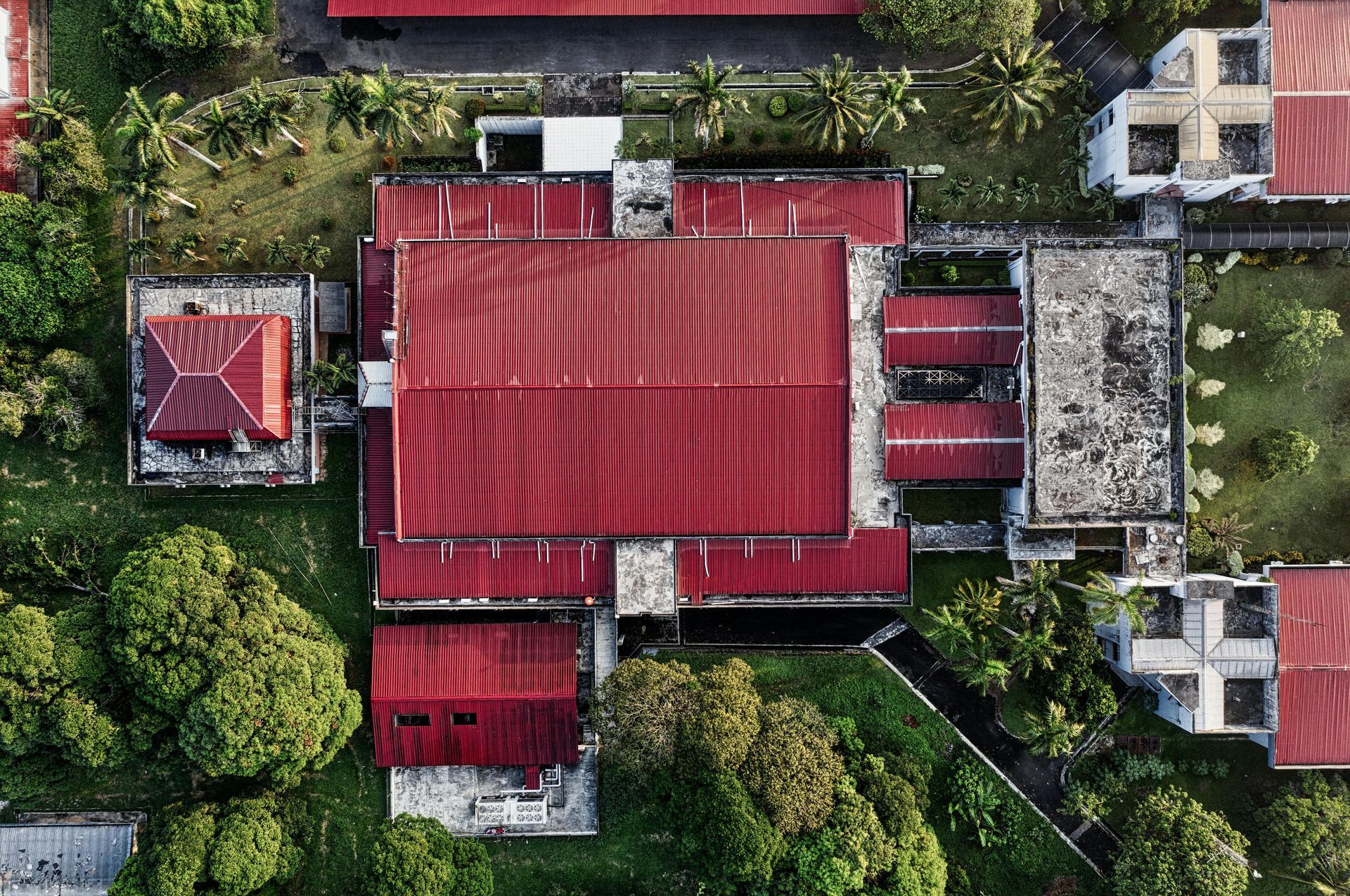
An aerial survey of an excavation site is communicating something entirely different from a carefully crafted twilight photograph of the completed building. Both are valuable, but they answer different questions. Rather than relying on one style of imagery, I prefer to build a visual language that evolves with the project. Photography, drone footage, interviews and short films each contribute something unique, allowing different audiences to engage with the project in different ways.
5. Beyond creating beautiful imagery, what practical value does ongoing documentation offer?
When people see the process behind a project, their understanding changes. A finished portfolio demonstrates quality, but documenting the journey demonstrates capability. It shows how ideas were developed, how challenges were overcome and how collaboration took place throughout the project. For investors, prospective clients and future collaborators, that creates confidence. They are no longer seeing only an outcome—they are seeing evidence of how that outcome was achieved. That depth of documentation becomes an asset that extends well beyond marketing. It supports communication, strengthens credibility and preserves knowledge that might otherwise be lost.
6. What is your working process when you arrive on site?
Preparation begins long before I take a camera out of its case. I study the site, consider where the strongest viewpoints will be, understand how light changes throughout the day and plan safe flight operations where drone work is involved. Every location presents different logistical and creative challenges. I'm also interested in the people who bring a project to life. Construction sites are full of skilled individuals whose work often disappears behind finished surfaces. Whenever appropriate, I like to include that human element because buildings are ultimately created by people, not just drawings.
7. How does the final architectural photo shoot differ from documenting the project throughout construction?
The final portfolio is a carefully considered interpretation of the completed architecture. It reflects how the architect wishes the project to be presented and often involves close collaboration to achieve that shared vision. Ongoing documentation serves a different purpose. It records progress honestly, captures moments that will never happen again and builds context around the finished work. The two approaches complement each other. One tells us what was built. The other explains how it came to exist.
8. How do you see the relationship between architects and visual partners evolving?
I think the relationship will become increasingly collaborative. Architects already work closely with engineers, consultants and specialist designers throughout a project. I believe visual professionals should become part of that wider creative team rather than being introduced only once construction has finished.
Architects are experts in designing buildings. Visual partners are trained to communicate complex ideas through images and film. When those disciplines work together from the beginning, the result is not simply better photography—it is a richer, more complete record of architecture itself.
Ultimately, my role is not just to document a building. It is to help tell the story of how that building came into being.